Lessons for a life of humanitarian service
“Reverend Tsuji is lit from within,” my mother exclaimed. She and my father had met him the night before at the Toronto Buddhist Church. She was now walking around our home repeating this phrase, like a joyful mantra, over and over again.
It was 1955 and I was barely six years old.
The following Sunday, I was seated in a large beautiful hall fashioned from hand-cut redwood, surrounded by generations of Japanese people chanting Buddhist verses. I was swinging my legs on a chair with my parents sitting on either side of me.
Although I was too young to know it at the time, I was in the presence of a living miracle of human resilience, community survival and deep inner practice.
“That’s Reverend Tsuji,” my mother whispered to me, nodding in the direction of a large gentleman in robes, striking a huge reverberating gong. I remember his smile. There was an invisible energy you could feel all around him.
Even after all these years, I have kept this greeting card from Reverend Tsuji with his wife, Sakaye, and their extended family that they sent to everyone in their community in the 1970s.
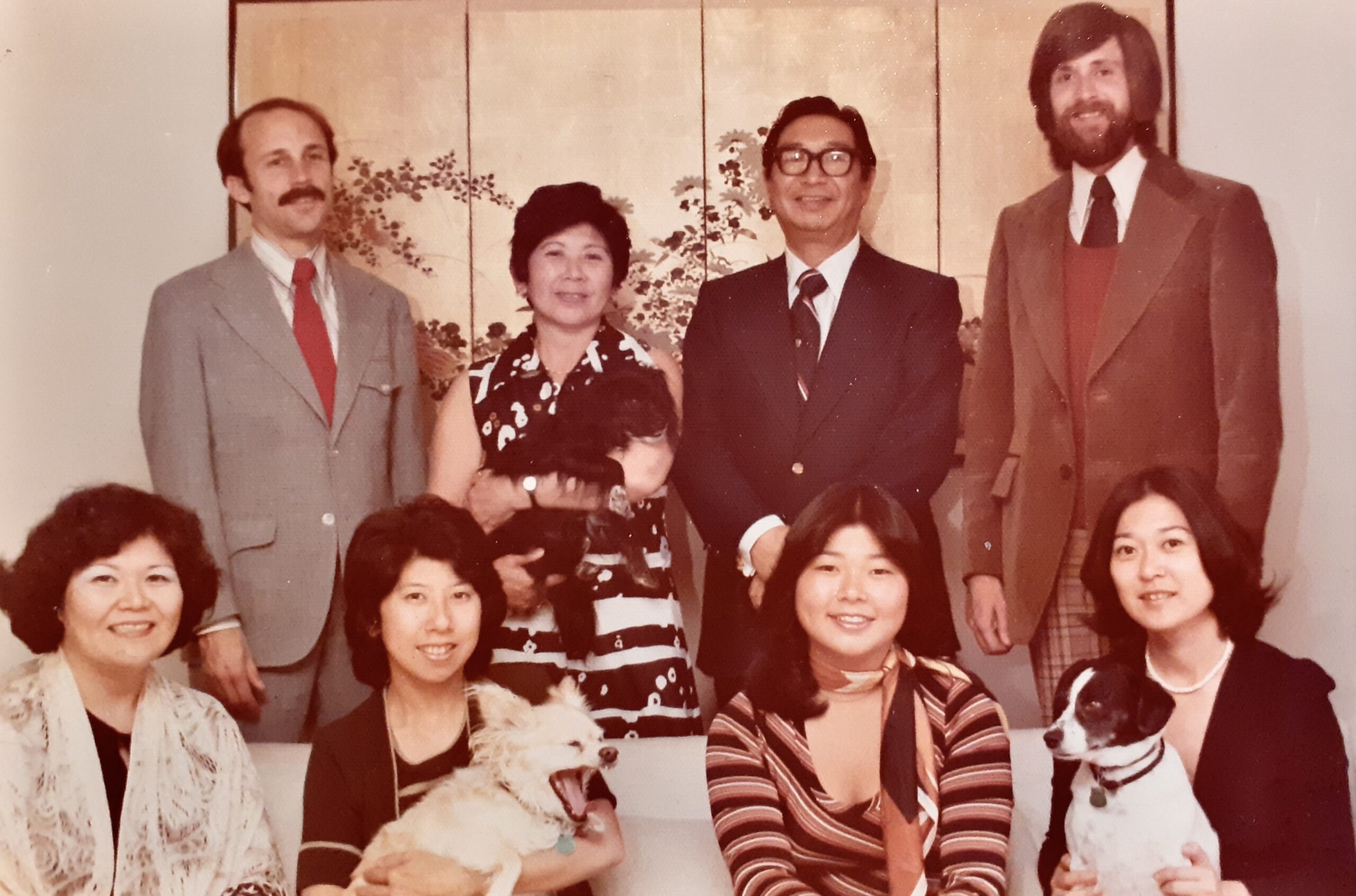
Learning the lessons of war and peace
Born in Canada in 1919 and having received a degree from the University of British Columbia, the young Kenryu Takashi Tsuji travelled to Japan to undertake religious studies. He was successfully ordained there as a minister in the tradition of Shin Buddhism established by the 12th century master Shinran Shonin.
Just before the outbreak of World War Two, he returned to British Columbia. But like so many other Canadians of Japanese origin – in what is considered to be one of the worst violations of human rights in Canadian history – he was among the many thousands stripped of their rights, forced into internment camps and deprived of all family property.
Released after the war, but having been declared “enemy aliens” and subjected to intense racial hatred, the survivors of the camps then faced the challenge of rebuilding their lives and their community.
At that point, in his late 20s, the young Reverend Tsuji took up the challenge of establishing a Buddhist temple in Toronto. Against the backdrop of anti-Asian racism, his community cautiously adopted terms, like “Buddhist Church”, to lessen the risk of having to face yet more discrimination and alienation.
I experienced this racial and religious prejudice myself as a little boy. When the other kids at my school found out I was a Buddhist, they started taunting me, calling me “a blue baby”, shouting and ganging up on me for being “a sun god worshipper”. I had no idea how to deal with their abuse, but looking back, I realize I was learning one of the lessons that would later shape my lifelong dedication to inter-faith understanding and the protection of human freedoms worldwide.
I learned two other lessons.
First, as a result of my parents’ contact with the Japanese community in Toronto, I learned in depth the meaning of the words, “Hiroshima” and “Nagasaki”. Years later, when my work for international human rights took me to Japan, I made a private, personal pilgrimage to the Peace Park in the centre of Hiroshima. This was the epicentre of the explosion of the atomic bomb that was dropped on the city without warning on the morning of 6 August 1945.
Now, decades later, a little metal bell I bought as a memorial at the Peace Park hangs in my home at the entrance to my shrine room. Hanging next to it is another small bell – from the Buddhist monastery on the island of Po Lin off the southern coast of China – engraved with the words spoken in the famous Heart Sutra by an emanation of Amida Buddha.
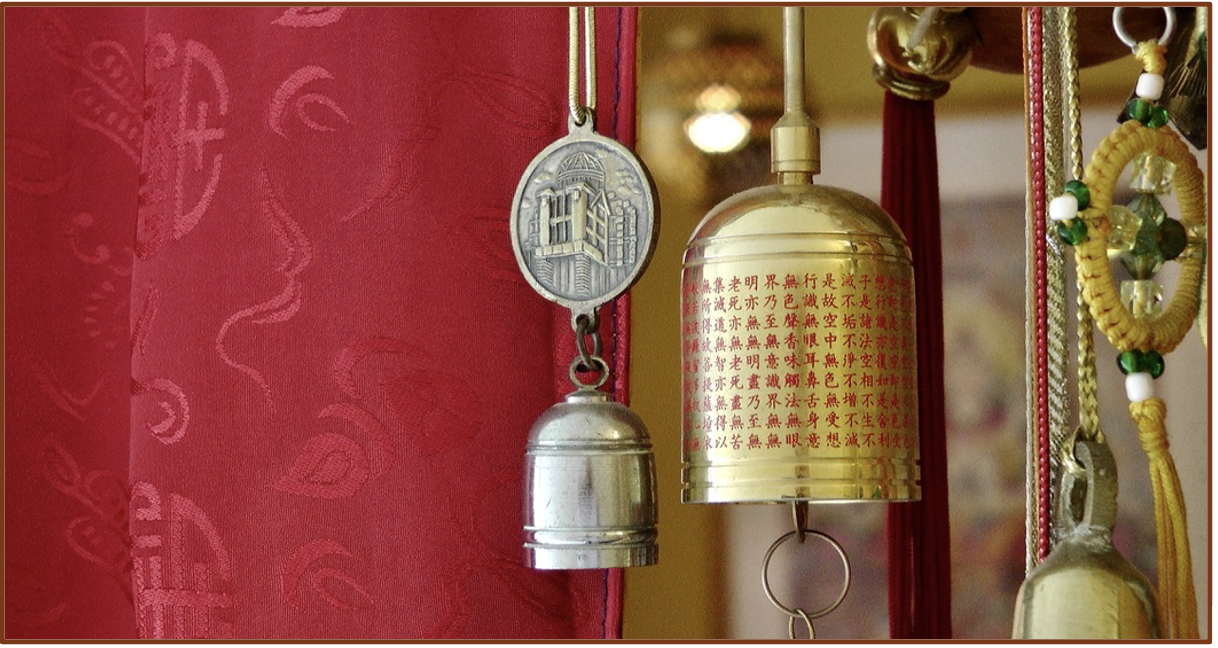
Each day when I enter and leave the room, the two bells ring out as they touch each other. Their delicate sound is a penetrating reminder of both extreme human suffering and sublime human wisdom.
The heart transmission of human dignity
There was another lesson I learned from my years among the Japanese community in Toronto. I realise now that, just as much as my life was shaped in response to their suffering and degradation, there was also a parallel transmission I received. It was perhaps even more potent.
It was something that transmitted itself silently through the manner in which the community members held themselves and related to each other – and the way they welcomed our family. It came through in their gentle and humble, yet dignified, ways. And through the elegance of their simple rituals – even in the delicacy of the tiny pink and gold paper flowers they cut and pasted together for Hanamatsuri.
It was a heart-to-heart transmission of human dignity, of the enduring power of culture, and the inner meaning of the dharma. It was a transmission of life experience and wisdom beyond words.
This is beautifully symbolized by a family obutsudan (traditional family altar) that was carved during the war in the Heart Mountain internment camp in Wyoming at the request of a Pure Land Minister, the Reverend Tesshin Shibata.
According to his grand-daughter, the Reverend Candice Shibata, he had one special request. “He asked the skilled workers to carve images of camp life onto the outer panels of the altar and lotus blossoms on the inside. His vision was that the obutsudan should capture the reality of the incarceree’s lives in this world of suffering as well as the promise of awakening in the Pure Land.”1
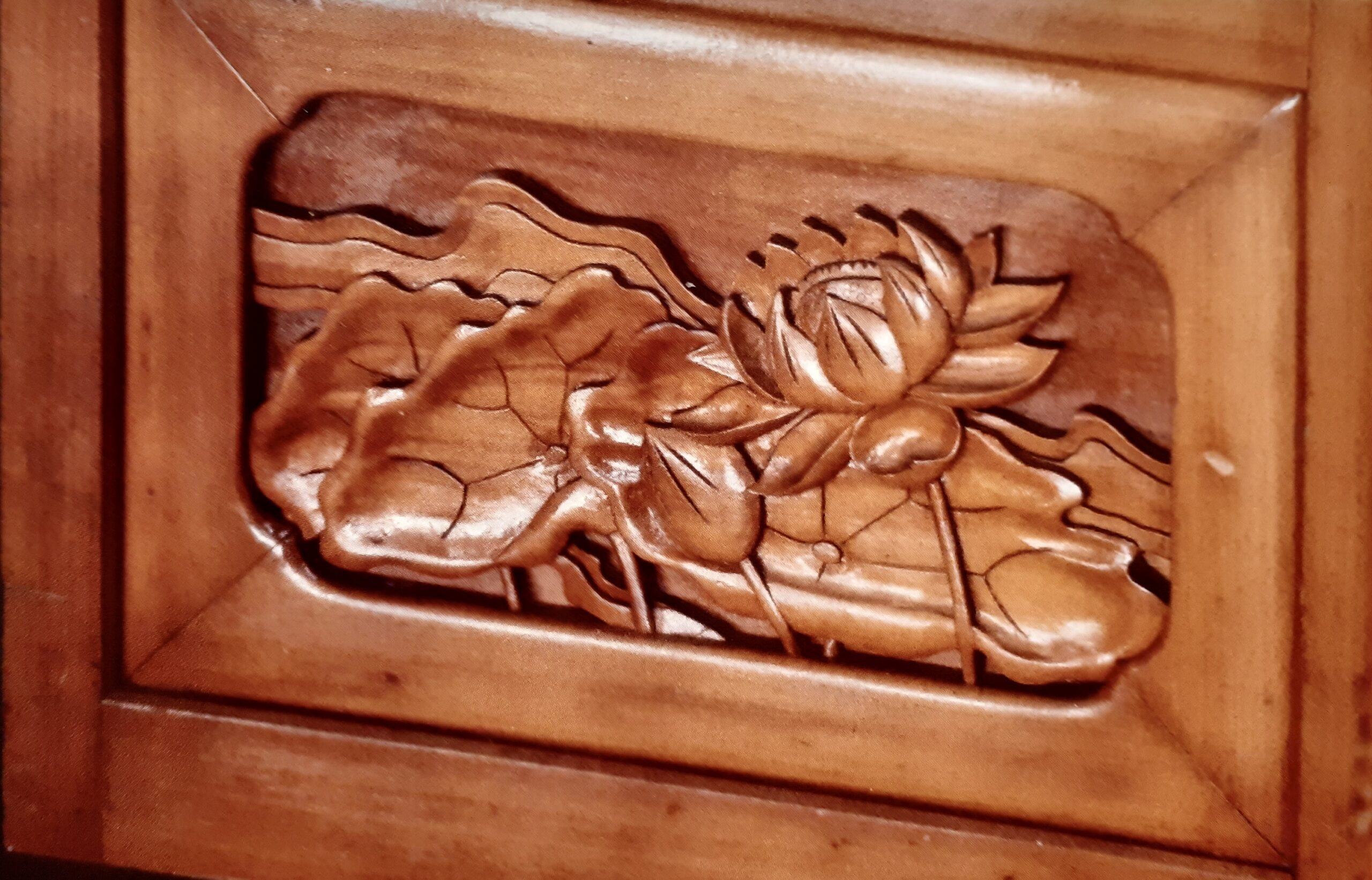
Thus, as this photo shows, the Lotuses of the Pure Land were engraved inside the obutsudan as the inner reality of the world of the camp.
This is what the radiant energy of Reverend Tsuji and the warm-hearted community of the early Toronto Buddhist Church taught me. The catastrophes they had endured were not the bleak opposite of what we imagine a Pure Land to be. They were, in reality, a perfect training ground for the deep practice of compassion.
A universal perspective
Senior members of the TBC may remember the visits to Toronto in those days by two distinguished masters in the modern history of Shin Buddhism – Shinichi Hisamatsu and Dr Daisetsu Teitaro Suzuki. Both expressed the wish to visit “a typical Western family” during their time in Toronto. They were brought to our home and blessed it with their presence.
Dr Hisamatsu is remembered worldwide for his transformative spirit of internationalism and his famous “Vow of Humankind” – a triumph of the mind, arising from the ashes of wartime devastation.2 Dr Suzuki’s influence on the western understanding of Buddhism was unparalleled in his time as was his description of the Nembutsu in his work The Buddha of Infinite Light.3
Both these remarkable men, like Reverend Tsuji, expressed an unmistakably international perspective. Their feeling of universal dedication to all beings – transcending all barriers – was palpable. It was a worldview that seized my imagination, all those years ago, in the verse we recited at the end of each Sunday service.
We chanted these concluding words in English, led by Reverend Tsuji, who later became Bishop of the Buddhist Churches of America and played a key role in the World Conference on Religion and Peace4:
To the Lord Buddha, who promised to be present in His Teachings, we pledge our loyalty and devotion. We consecrate our lives to the Way of Life He laid down for us to walk. We resolve to follow His example and labour earnestly for the welfare of all humanity.5
These words had a profound impact on my young mind. When I graduated from the University of Toronto, I made contact with the human rights organization Amnesty International and moved to London, England, to become a volunteer at its headquarters. What followed turned out to be a lifetime dedicated to global service in the fields of human rights, peace and environmental protection.
I think back to my mother exclaiming, “Reverend Tsuji is lit from within!” For all that has flowed from that moment until now, I bow in deep gratitude.
- Quoted in: Duncan Ryuken Williams & Emily Anderson, Sutra and Bible, Faith and the Japanese American World War II Incarceration, Kaya Press, 2022 ↩︎
- Hisamatsu, Shinichi, The Vow of Humankind: http://www.fas.x0.com/about/aboutuse.html ↩︎
- Suzuki, D.T, The Buddha of Infinite Light – The Teachings of Shin Buddhism, the Japanese Way of Wisdom and Compassion, Shambhala Publications (reprint), 2022 ↩︎
- The Washington Post,: https://www.washingtonpost.com/archive/local/2004/03/10/kenryu-t-tsuji-dies-at-84/87e9c82b-5db0-445a-8c01-f6fdb58e1150/ ,March 9 2004 ↩︎
- Toronto Buddhist Church, Selections in Shin Buddhism ↩︎